March 26, 2025
#3 – Who Are You? (COMES THE INQUISITOR)
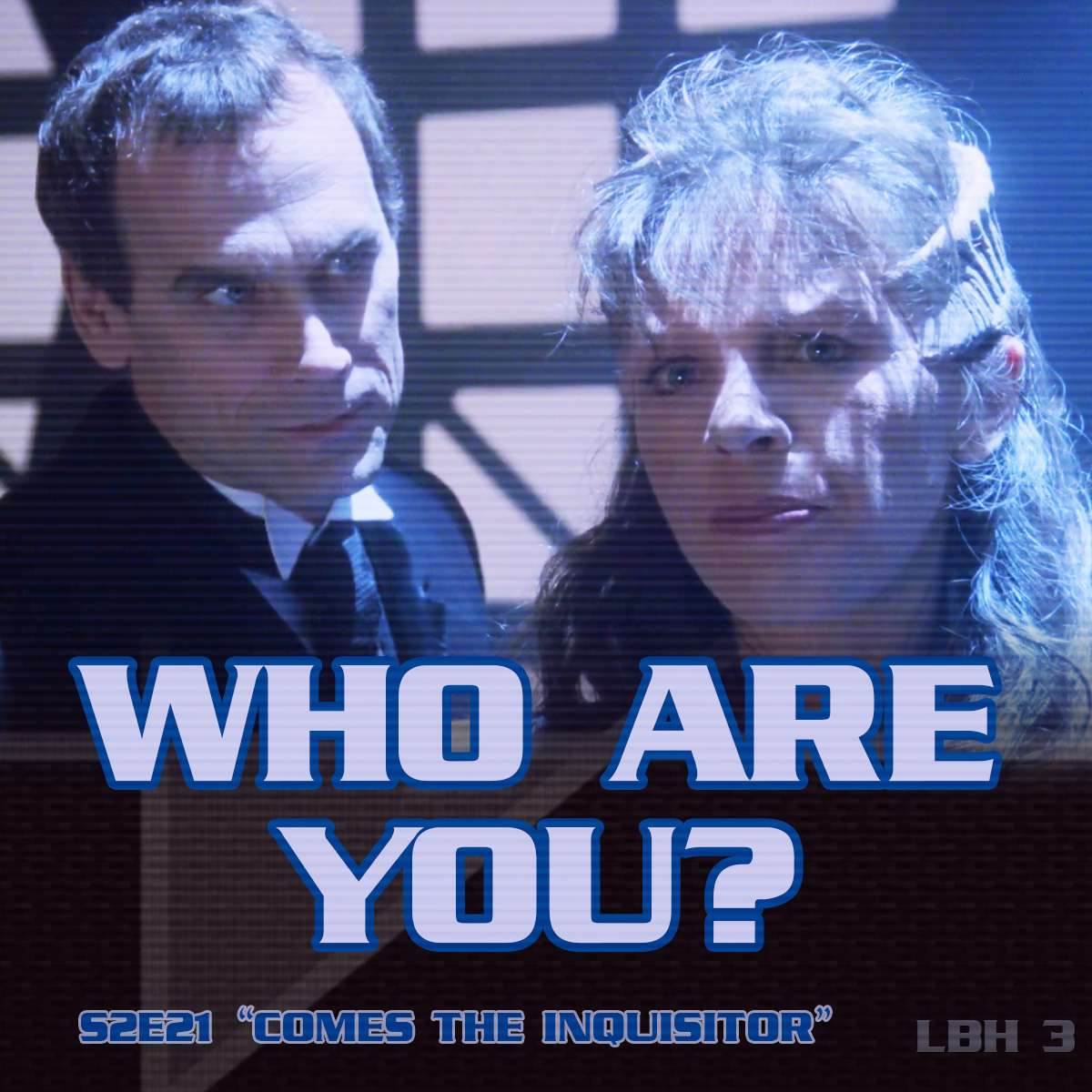
Listen
<*>
Transcript
JOHN: Foreign.
JOSH: Welcome to Last Best Hope, a Babylon 5 podcast where we try to make sense of and cope with these strange times that we are living through in the real world. I'm Josh and joining me in the observation dome is John.
JOHN: These are strange times indeed, to say the least.
JOSH: Yeah, I'm glad we're doing this because you know, we've recorded a few episodes now and there's something about relating to the very frightening, very sort of head spinning events that are going on through this, I guess, parable, you know, sort of one step removed from reality that makes it much easier to kind of grapple with, at least for me. But today we're going to talk about the second season episode, the penultimate episode of season two comes the Inquisitor. Which you know, wasn't. I mean we're sort of doing these episodes out of order. It's not a watch through podcast. But comes the Inquisitor wasn't necessarily one that I thought we would do, but I was watching it and there were some things that really stuck in my craw. So let's just kind of see where this goes. Um, John, what do you think about this episode?
JOHN: It's, it's a chilling episode actually. It's, it's one of the more self critical episodes. It delves into the notion that Joe later also talks about is that of hero worship and of confidence in your own righteousness. That's really intense. And the first time I watched it as a, as a teenager, I found it quite distressing because it was, it was taking the, the, the heroes of the show and putting them through the ringer. Not, not in a sense of the heroes fighting the villain. It was the heroes being challenged for being heroes. Are they what they say to be? Are they, are they supposed to be what they are? Is there such thing as a hero? Which that's a question this episode begs and does not give a complete answer to, which is why it was so good. It wasn't an episode I was expecting though. I have a memory. Specifically I, for some reason I was watching it on the kitchen tv, which is this little tiny thing. And I don't know what I was doing, but I watched like half the episode on this tiny screen. And I just remember that because of the size of the, of the tv, the way the episode was shot and the episode, you know, because they're being well inquisited and tortured throughout it, it made it seem all the more intense and real and something about the shots just being in this little screen like zooming in and being like oh, this is the. I felt confined by it. I felt very uncomfortable. It's one of the few episodes where I can actually go back and be like, yeah, I had a feeling about that episode when I watched it. That carried through all the years. It wasn't an episode that I often went back to rewatch because it wasn't a feel good episode per se. I think it's one of those things that some of the episodes, even the, Even the darker episodes in season four, when you're at the peak of the Shadow War and the Earth War, there was still this very, you know, substantial humor to it. This, this was an intense episode from beginning to end. And I'm just thinking of, you know, Jakkar in this that you really begin. You do get to see his arc really, really going into a high gear, like, oh, something's good. Jakkar's gonna figure something out. Something's gonna happen. And, and, and where he goes with that. So, again, Avon 5 is always good on having the multiple stories happen at the same time. It's not just about the one character. You have Delenn, you have Sheridan, but you also have Dakkar. You also have Via Cotto. You have, you know, all of their interactions trying to figure out how the Narn are going to be treating their own leader. So this is really an episode about leadership and what it requires to be a leader and what a good leader is versus a bad leader. Because I think it also gives a bit of a hint into, like, well, Londo is becoming quite the leader. He's just a really bad. And that's why the end. His end fate is so profound in the series because he ends as a good leader. For those listening, I just said air quotes. He sacrifices and has to make the toughest decisions imaginable, but nothing is nice. Nothing. Nothing is rewarding. It's the. It's the necessary. This episode sort of gives you, well, can you be a happy, go lucky leader? Can you be. Can you be somebody who believes in good, does the right thing all the time? Is that even a type of person that really exists? And the Inquisitor challenges that. And yeah, I didn't. Oh, I did not like the Inquisitor. I did not like who he was, what he stood for. I. Because he was attacking the heroes. But in retrospect, I see the purpose that Sebastian plays and the question I'm gonna ask you not to answer right now, but as we get into it is when did you know? When did you know who he was?
JOSH: Who he was? My Answer is unsatisfying. I'll answer it right now. I don't. When I was a kid, I don't know that I was so well versed in Jack the Ripper lore, so nothing really jumped out at me. Yeah, oddly enough, that is something I was wondering when I was watching it this time. Because again, I think we talked about before, like how TV, you know, watching this TV artifact from the 1990s, you know, certain things in the last 30 some odd years have developed in terms of how literate, media literate and narrative literate the average viewer generally is and how things have maybe progressed a little bit. So I think there are tropes or devices or things that you could deploy in the 1990s on TV and utilize effectively, whereas today, maybe you couldn't get away with it because people would see it coming. And I was trying to figure out where this would land today. And I really do think it depends on your familiarity. Not familiarity, but how close to the surface your thoughts about Jack the Ripper are. One of the interesting things. Coincidentally, JMS on his patreon very recently posted his new theory about the identity of Jack the Ripper. He's something of a Ripperologist, actually.
JOHN: Oh, wow.
JOSH: Yeah. So, you know, when I say it depends on how close to the surface your thoughts of Jack the Ripper are, for some, you know, like a JMS like it probably. He probably relates things to Jack the Ripper more than the average viewer. So I really think it depends how familiar you are with Jack the Ripper and how accessible that knowledge is. So I think this would be effective for most of a general audience, you know, even today. Yeah, I think some jaded, maybe genre fans would view this as a trope. But even if you do, the way that it tells you so much about the Vorlons and who they are and how they operate and the way that it ties into the larger mythology. Something very interesting. So, you know, also having my practical TV writer's hat on when I was watching this, we are reminded in this episode of the essential mystery of the Vorlons. Namely, no one's ever seen a Vorlon. No one knows what they look like. Just in time for the revelation in the next week's episode that we already covered. You know, just to refresh in the audience's mind. Oh, yeah, that's right. No one's ever seen a Vorlon. So that next week when you see one, you have that close to the surface. And it's also interesting, and I don't know at the time, if watching this the first time through, I don't know how much this comes across, but in retrospect, actually, because we watched it backwards, we just recorded our episode about the next episode, Fall of Night, where you see how the Vorlons appear and for humans, they look like the stereotypical vision of an angel. And in the episode right before we.
JOHN: No droshala, droshala. Oh, yes, Jalan you mean it's like no joshala. The way they. I love the way the banter is set up around that.
JOSH: But what's so interesting is that what the Vorlons are revealed to have done in this episode, meddling in our history, utilizing figures like Jack the Ripper to advance their own ends and to sort of declare themselves as the arbiters of, you know, who is worthy of leading. Right. That's very sinister. Right. Before we find out that they are literal angels, they appear to us that way. So I don't know, there was something about that juxtaposition, watching it in reverse, where I was like, oh, yeah, we just learned that the Vore lines are actually angels, like real angels for all intents and purposes.
JOHN: Right.
JOSH: And they're also pretty sinister and do some questionable things.
JOHN: It was the first time that they introduced, you know, more about the Voronlan goals and methods rather than just being mysterious aliens. You get, you got a sense of how they operate and that was it. It really straddled the line between, like, they're the good guys and they are also a bit shady here in their methods and, and certainly very self righteous, which is the very thing they're starting, starting to sort of combat by, by the Inquisition here. So it's why, I think you're right watching Reverse Order, it's why Sheridan challenging Kosh, even after his revealing himself. Well, yeah, Sheridan is skeptical. He's like, you manipulated us. You, you showed us what we want to see. You know, he didn't assume, oh, four islands are angels. Like, they're, you know, and, and literally he didn't call them like God's angels or some holy. He was just like, oh, I see what you did here. But also doesn't turn against them either. It wasn't. It was a very pragmatic approach, I think that goes to. And I'll say that, like, at this point, I have watched a ton of episodes now and I will now have to go back and rewatch them again based on the episodes we do because it's easy for them to flow together so well. But you realize I am more impressed now with Sheridan as a character than I've ever been in terms of his way of thinking from going back to the episodes we just did about how he collects secrets and conspiracy theories. Stuff that I didn't really, didn't really grab onto in, in, in my earlier watches as to who Sharon was. Oh, he's, he's a cool captain of the station. He, he was written very interestingly to be this very multi level character. And he's there because obviously has to be written in to be the captain starting the second season. He's written in to be there for a reason. His skills, his capabilities, his morality, his sense of duty. All of those together. They're not just like, aren't we lucky we got the right guy in the right place. Santiago, President Santiago put him there. Put a contingency plan in that if something happens to him last minute, put Sheridan in. We need somebody like that. Santiago must have known something was happening and you began to get those senses that he saw rumblings within Earth alliance government that something was afoot. So he put in some safeguards in terms of people and officers. Sheridan is one of them. And that's why he ends up being tested in this episode in addition to Delenn. It starts off, you think the Vorlons show up first Vorlon ship, besides Kasha's ship to ever appear at a station or outside of Orlon space. And Delenn informs him, hey, I got this thing I have to go through. Kasha still may have to do it if in the same charge of the Room Rangers and keep all the Voron technology they're making. The White Stars that are going to be revealed in the next season as we find out. You know, obviously the Vorons have a lot on them and you think it's just going to be about Delenn. And then Sheridan shows up and you realize, oh, it was meant to be about both of them from the beginning. But Sheridan is there for a reason. He's, he's not there because they got lucky, you know, and, and I think that's, you know, some Claire turning out to be Valen. Whether that was. Again, I, I, I'm not super familiar with exactly what the original, original plot line would have been had Michael hair not left. But these aren't like just mistakes of fate. I don't think JMS wrote it just to be that it was. Sometimes people are put in place by others to say, hey, I sense something's coming. Let's try to find the right, the right people. And this episode is about finding the right people. But I want to jump back to the very beginning so listeners have a sense of where the episode starts. It's actually Jakkar. And Jakkar, you know, Jakkar is Cassandra, the Greek myth. Like it's been said numerous times in forums. I don't know if JMS has said it himself, but like Jakkar is the Cassandra figure of this, of this drama, you know, faded now to know the future and have no one or few listen to him. He's read the book of Jaquan, realizes these are the shadows. This has all happened before, um, and it's happening to his people. And now the non home world has been bombarded, has been conquered, it's been captured and he's trying to warn everybody else that in the, in the League of Non line worlds that they're all next. Like the Centauri aren't going to stop with the Narn no matter what they say. And, and, and you know, no matter what they say. In the episode that comes next, as we see, you know, the very, the very end of the next episode is that, you know, famously angry clenching fist Londo Malari that once they have their non aggression pack with the Earth alliance, they are going to start hitting the other worlds. So Jakkar told them only this episode, like hey, you're going to get hit. You're going to get hit. And no one really wants to believe, won't believe them except vere ve starts getting it and ve. It has these moments throughout the episode where you see again that the B line characters are as important as the A line characters. You know, Zach Allen, all, all them are really, really important even if they don't get the top billing. And you see Veer realize, huh, there's something here, there's something happening. So while the big story is going online, we have an inquisition happening. You have other people also having revelations, also beginning to listen. And that's, I mean honestly that's sort of how I feel today, telling people, hey, this stuff is happening. It's literally happening. Like you can show that there are, you know, very questionable actions of your own government there, there, there are people saying things and I, I think in comparison is, and this is going to be, you know, a pretty, pretty obvious one have been the, as some in the media call them, the numerous Roman salutes we've been seeing from our current administration here. The Roman salute famously becoming utilized by the Nazi party in Germany. And the people saying, hey, that doesn't look right. You shouldn't be doing that. And coming up with an excuse saying, well, that's was enthusiasm, it was autism. There, there was a strange explanation for something like that. And then seeing repeated uses of that same salute in the CPAC convention not too long ago and then being told, oh, no, but that's not what that is, that's not what that is. And I feel like you feel like you're going insane because you look at something, you say, well, it's a reasonable assumption that that something is what it very plainly seems to be without. There are no conspiracies or, or, or, or crazy. You know, trying to put pieces together here. It's just, what are, what are people doing with that? And Jakkar's doing similar things. He's saying, these things are happening. These people have attacked. They wiped out my people. They did it. And you don't think it's going to happen to you. And that was. The warnings in Germany was, you know, they came after my group and they'll come after your group and, and that's what happens. But it's saying, trust your eyes. Trust what people do and tell you they are. Don't try to shy away from the truth. And nobody really wanted to hear that. The Legal Non Aligned Worlds, one episode later, obviously sees the truth for what it is. But in this episode, I just don't want to deal with it. It's like, oh, you know, just stop being crazy. Stop, Stop being so aggravated and so intense about this. And it's easier to not listen to that very distressing voice because it's a distressing voice. That's what it is. It's not. Jakar's not crazy. Jakart is not a conspiracy theorist. He's not just looking to provoke because he's looking for next, you know, some unified theory of politics. He's coming through something that he witnessed. He saw evidence of the shadows in the first season. You know, he's experienced. You know, he does certainly have some knowledge of the first ones and things like that. What, what do you do with that? And Veer, Veer starts that process. Veer starts his sort of journey to. There must be something bigger. What do I, what do I do? But I think that, I think that's also why Veer isn't as vulnerable as we go on. So I just won't go on the about too much longer. But I thought that was a neat storyline. And then of course, where that goes after, when they're in the elevator together and Veer tries to apologize to Gakkar and Gakkar Takes out a knife and cuts his own hand. And the blood drips. And he says, say dead. Dead. And this is one of those moments for Jakar. And the actor Andreas Cassel is brilliant. Like, the intensity you felt, you. You felt so awkward for Veer in that moment. And so like, oh, this is. This is dead. How do you apologize to them? I can't. Then I cannot forgive you. This is. And this is really what Jakarta's journey is all about. So you do get such a good sense of where Jakar is going. You get a sense of the intensity and of what it's like to just know what's happening and not have anybody listen to you. Which sets up, you know, the stations of that. And then later, that's what Delenn is grilled on. You know, how do you know you're meant for this position? How do you know that you should be leading the battle against the Shadows or even that you should be fighting the Shadows? You know, how do you have this self confidence in that? Is it just pride? And that's. And that becomes the real question of the episode. How do you differentiate between pride and pride? Arrogance and just a genuine belief and willingness to fight for a. For the good, light side?
JOSH: Yeah, you know, that's an interesting question. I want to come back to that. But, you know, again, it was watching the teaser of this episode with G'Kar and the Zocalo sort of ranting and yelling like a, you know, lunatic on the street, you know, on a street corner. And the thing that struck me, you know, you mentioned he's JMS's Cassandra figure. He's the Cassandra of the show. I think this may be the first time in the show where you really get that sense. He said other things. I think it was in. There was in season one, he was talking to Katherine Sakai with. Where she had had her experience with something weird on Sigma 597. And G'Kar rescued her by sending some Narn fighters to follow her out there because he knew that strange things happened there.
JOHN: Yeah.
JOSH: And in their conversation, there's like an insect. I think it's like a ant.
JOHN: It's an ant.
JOSH: Yes. It's an ant that he looks at and he's explaining, you know, there are things in the universe that regard us the same way we regard an ant. And, you know, when I have an ant on my finger and I pluck it from over here and I put it over there the ant has no explanation for what just happened. And, you know, back in season one even when G'Kar was the antagonist, in certain respects, you got certain windows into, oh, like he's saying something. There's something to that. You know, maybe we should pay attention to what Gakar is saying. And then in this context, in this teaser, you know, the thing that I was thinking very strongly, you know, watching it last week, was it just reminded me of the ranting and screaming of people on social media, a lot of politicians, a lot of journalists, about the threat that Trump and Elon Musk and Project 2025 and all of this stuff that was going to come to pass and in the last, you know, six weeks we have seen was exactly right. And it is interesting, too, because I think it's Adrazi who says to G'Kar, like, well, that's you. Like, maybe they'll leave us alone. You know, obviously wishful thinking. And like you just said, no one wants to seriously entertain that scenario. They don't even want to imagine it. Because for that to be true, that requires some drastic action and perhaps even sacrifice on your part. And even beyond that, just a sort of a more existential level. It really shakes your foundation, your understanding of how the world works and what the rules are.
JOHN: Yeah.
JOSH: And to accept this reality or the potential of this reality that it is possible, you have to reorient a lot of other things about what you think you know about the world, your place in it and what acceptable conduct is. And that's really hard to face. And we see it even now, you know, when the intentions and plans of the Trump administration and the, you know, the Silicon Valley overlords, it's very clear what is happening. And they're making no attempts to shroud or hide what they're doing.
JOHN: They're hiding in plain sight, as it were.
JOSH: And even then, a lot of people are still kind of hemming and hawing because it's very hard. Even when it's staring you right in the face, it's very hard to accept that that is the reality, because what that means is very uncomfortable, is very hard.
JOHN: It challenges. Yeah, you put it really well. And how it challenges your, your sense of where you are. It challenges your sense of how righteous your world and the leaders that you have previously supported, currently support are. And I think the, you know, to quote economic terms, you know, they, they, they use in terms of, you know, transactions, there's, there's the sunk cost fallacy that as you continually put sink money into a bad thing and you think, well, if I put more money into it, it'll Turn around. You keep on doing so from a psychological standpoint because, well, if I've already put this amount of money or work or effort and mental effort into it like, I can't waste all of that now. It's already gone. You've already spent the money. The effort's already been burned out. You still think that there's something that you have to. Okay, well, but look what I already did. I already put that rule. And if you've done that with your government, with your society, say, but look what I've already done. Look what I've believed. Look, look. Look who I've elected. Look what I've. The actions I've carried in my life in support of this then to realize that it's not happening is a very difficult thing to do. And it's given me a little more. It allows me to give people a little more grace as they see what's happening. And I say, well, some people have a higher threshold of. Of. Of what they need to see before they believe something is not right or is not working the way that they. They had hoped. But it's really, really. It's really, really maddening to those who've already seen. And just to back up on that notion of who. Who sees the truth. That's why I think this episode is so fascinating. For what we're talking about today is that you could ask what the hell do you and I know? You know, even as we're citing what's happening, you know, with what the administration is doing. And we. We. We could obviously spend the whole episode literally listing them. I think that's sort of beside the point here. But it's certainly what you and I believe. But what makes us so special? What makes us able to discern that or understand that this episode, the Inquisitor is there to. To torture it essentially out of or, you know, inquired out of Delenn and Sheridan. It's saying that, yes, anyone can think they have the answer. That's why I used conspiracy theorists as an answer, as. As an example before is that you'll encounter many people in life and maybe be one of them at different points. That you just want an answer to something and you come across something really out there. But it's really. It gets you. It compels you. For some reason, you say, aha, I have the answer. It must be because there's a secret cabal of people controlled by aliens from Planet X that are doing this. You'll come up with a whole theory. It'll make complete sense to you and you'll go out to the world and be like, I have the answer. Why don't you all listen to me? It all makes sense. So what is the process that goes through that, that, that, that really boils people down to be like, hey, are you being either delusional or are you being self righteous that you just want to, you know, know, get the attention and say, you know, hey, look, everything's falling apart and I have the better answers, you know, which is very much what the current leadership, what the Trump administration does. They've, they've been, they've been utilizing those same techniques. So how do you, how do you judge whether somebody is saying it from a position of, you know, I guess the closest we can get to objective truth or whether it is purely a manipulation and a self interest or a delusion? And that's really tricky because as you said, Jakart comes off like a madman in the Zocalo, just like we know as viewers what he's saying is entirely true. We get that ability as the viewers. How does Jakar communicate that? What if Jakkar is crazy? You know, how do you determine that? Not, you know, we don't have a observational viewer as far as we know. I mean, maybe we are being watched outside of this podcast in this world, but we don't know that. We don't, we don't know how to determine that. So the inquisitors is sort of the process by which you sift out the people and determine who, who has that and who doesn't. Then the question is, what a brutal, horrible way to do it and is that even a viable concept? And that's why the Vorlons get undercut, I think, by this episode that, that, that their morality and their, and their claim to moral authority already begins to diminish. And even though they maintain it through season three, we know that by season four, that's when it becomes clear that while they may not have been the eradicators, that the, that, that the shadows are, they are on their own terms, problems. They, they're not entirely right and they don't deal very well with, with that notion. But I like how this, this sort of begins that process, but it does give us a template to say, hey, how do you determine when somebody is spreading misinformation versus is trying to be a leader of a genuine cause? And that was, that was what they start with Delenn. And it's, it's going, it's really attacking Delenn's not just character. It's attacking her. She's grandiose. She's very into her speeches about star stuff. You know, everything else. She is really confident in her spirituality as a religious cast of the Minbari, you know, and her position. There's a lot of confidence there. And it could easily be arrogance and easily tip over into the lack of a better term. You know, buying one's own bullshit.
JOSH: Yeah, it is difficult to give a satisfying answer to. How do you know? How do you know if this person is someone that I can trust, that I can listen to how do you know how to weight what they're saying? And I think what the episode says on that point is, well, you can't fully. But what you can do is look at what else they do, how else they conduct themselves. You know, what else they think, what else they have done. And again, not foolproof. But that is a reliable indicator of how much to consider what they're saying. Which actually ties into something that really struck me about this episode even when I was a kid because I found it very unsettling and I don't think I quite understood it. You know, it's in this episode where, through Sebastian, we're introduced to the question that the Vorlons ask. Yes, the question, you know, we already heard in season one, Signs and Portents through Morden. What the Shadows ask of you, what do you want? And they keep repeating that until you say what you really want. You know, until you get so fed up that you just say exactly what it is. And what the Vorlons ask is, who are you? And it's through that repetition, you know, Sebastian asks Delenne who she is. She says, I'm Delenn, the ambassador for the Minbari. Wrong answer. Delenn is a name somebody gave you. Minbari Ambassador to Babylon 5 is a position you hold. That's not who you are. And it's through that repetition she keeps on searching.
JOHN: And it burns away the layers. It's exactly. It's a purification process. It's really. You know, every answer gets you closer. But maybe, like an onion, you never quite get to the center. Or is that a tootsie?
JOSH: Romore, JMS Said at the time. And I think he elaborated on it some in his autobiography, his memoir. That was a kind of interrogation technique that was deployed by the. He didn't call it a cult, but that. That group that he found himself involved with when he was a younger man. It's, you know, sort of a way to break the subject that you're interrogating because when you Ask somebody who you are. It's like, well, I'm Josh. And when that answer is wrong and you keep trying to give the correct answer, things that you know to be true about yourself, but that's not the answer that they're looking for. That is very unsettling and that is very destabilizing and that softens you up for to be led wherever they are trying to lead you.
JOHN: Do you think that in a way the Vorons were doing sort of a multi level psychological test here? Because, I mean, it would, it would be fitting, is that not only are they doing what they normally do, which is the who are you? And get you to have a more. And it does. That is a process that can, in theory, but that's a brilliant point you bring up is that it's also an interrogation technique that is very cult like or very, you know, I could imagine intelligence agencies using similar techniques. Again, they're trying to break you down because you think you give the right answer and it's not the right answer because it is, but it isn't, it's not enough. And there's always more to go because it's not a question that has a simple answer and never has a. Never has a final answer. Sebastian was not waiting for a final answer. What he was doing, which gets to what you said, is that he was looking to see that when you're broken down, can he really manipulate you? Can he really, really manipulate you? And that jumps right to the end of the interrogation where, you know, Sheridan has come in and is like, I am suspicious of what's happening here. He's gonna, he's gonna come in as the hero and he immediately not only gets, you know, caught by the power of the staff that Sebastian has, but it says if you intervene, which you can totally do, not gonna stop you, but if you do, she fails. Also very manipulative. That, that's sort of a classic. Like, that's a hostage situation in effect. So he, he, he ropes Sheridan in because the Vorons knew and they had, they couldn't have told Sheridan to suffer an inquisition because what, why the hell would he do that? He's, he's not connected to the Voron. He's been learning from Kash, but he's not, he wasn't working with them for years and years and years. He didn't have a belief in them. So he wasn't going to acquiesce to an inquisitor. But if the Len was in danger, they could manipulate him into it. So they manipulate him into the Inquisition. Then at the. As he is asked the same questions as he watches Delenn being. Being. Being tortured with that question with. With pain with the staff. You know, he gives them the option basically out is to give the answer he wants to. He gives them the answer that he wants to hear and says, if you just tell me that, you're free to go. Which else it did in Star Trek really well with the. With the four lights. You know, tell the interrogator what they tell you to say. It's. It's not about the truth. It's not about getting intelligence. It's about breaking it. And in the end, they both are willing to make a mutual sacrifice for each other. And that was. Whether that was the entirety of the test or the point of the test is left as a question mark with this. Which is also kind of cool because it's not like, oh, well, we know now. We know exactly what the Vorlans and Sebastian were up to. No. He seems a little bit surprised at times. And. And it doesn't seem like there's a one script for the way this could have gone. But after being tested and being broken down, they are broken down. Delenn in particular, has been whittled down. All our defenses are down. So once that shell is gone once that sense, sense of self, sense of purpose, that sense of pride is burned away. What do you do when you're threatened? What do you do when you're given an answer?
JOSH: Who are you?
JOHN: Yeah. And who they are were their actions in that moment. In that moment, who they were was their decisions to say, we will sacrifice and share. I will sacrifice for her, and she would sacrifice for him. Even if it meant they lose everything. You know, they will not. They will not let the other suffer for their own pride. And that was that. That. That's how you get, in a very forlorn way how to determine if somebody might be a good leader. Might be. You know. Yeah.
JOSH: That was something that I thought was actually rather profound. The thing that ultimately gives Sebastian his answer, you know, are these. The people is seeing that they are willing to die, you know, alone in the dark with no one to sing their praises or see their sacrifice. You know, they're doing that because it's right.
JOHN: Yeah, They're. They're doing it because it's right. And they value life. Period.
JOSH: Exactly.
JOHN: And they're not. The really important distinction is that they're not martyrs. They're certainly religious martyrs. There'll be no one singing their praises. There'll. Nobody be Nobody saying, well, they are so righteous, aren't they? You know, and that. That is the. That's why Sebastian sort of leads with this, you know, little bit of. What does he say? Basically, he says, you know, good luck to you and your holy cause. You know, and I don't think that was meant to be, that you even believe it's a holy cause. It was meant to say, well, you know, it was sort of implied. But if you were just serving the Vorlans, if you were just serving the cause you would be willing to sacrifice somebody else else for the cause. We see that all the time. It's like, well, we gotta sacrifice you for the greater good. And then, of course, the point is Sheridan has to literally make that choice. Many times. I was just. Cause I've already gone through almost to the end of the end of the Earth alliance storyline when he has to use the telepath or he chooses to use the telephone. He doesn't actually have to, he chooses to use it. And his interaction with Bester, discussing the different morality, Bester versus Head. He's not claiming to be perfect by any means.
JOSH: And he's like, you do because you like it, right?
JOHN: You do it because you like it. And. And when he makes this. When that decision even he is still debating was it right, was it wrong? We may never know. Maybe. Maybe it can never be right. But it wasn't a, I am holy. Whatever decision I make, therefore must be right. That's. That's the danger. That's the difference.
JOSH: So. So you really hit on something there. Because that goes back to a little bit earlier in the episode. The first time Sebastian, you know, sees a glimmer of something in Delenn is when he asks her if she ever has doubts and she says yes.
JOHN: And he gives her a brief reprieve.
JOSH: And that reminded me, you know, when we were talking about the idea that, you know, the good Germans who became Nazis weren't some monstrous aberration. I think it's safe to say we are seeing something very similar here in the United States. And it's like, how do you not succumb? You know, how do you not allow yourself to become complicit and not be taken in by this manipulation, this vision of the world that is painted for you by a charismatic leader and media. How do you hold on to what you believe is right? And, you know, what we said was that you have to accept the idea that but for the grace of God go I the idea that it could be you. You do have that within You. You need to accept that you're not righteous. You could just as easily succumb. And I think similarly, I think is the answer here, the way Delenn does, the way that you pointed out Sheridan does as well. You need to still have doubts. You cannot be righteous. There needs to be room for. Well, what if I'm wrong? Maybe I'm wrong.
JOHN: Yeah.
JOSH: Because it's that certainty that. That lack of humility which is what I think Sebastian uncovers that Delenne and Sheridan have. They have humility.
JOHN: Yeah.
JOSH: They are doing with every fiber of their being what they believe is right but they're also open to changing their.
JOHN: Minds with new information and seeing things through another's eyes. Yeah, that was, you know. And a clever. Like Delen is the. Is the one who ultimately really says she will. She will sacrifice herself. And. And. And. And, you know the line, right? It was. But you have a destiny. And she says, another will take my place if the. And she says, I. I'm trying to remember the words that I'm looking at up right now. She says, you know, another will take up the cause for as long as is needed to complete the task. Her cause is life itself. That's a very broad category. But she's not saying I'm righteous. Whatever I believe is correct. Basically saying, like, if. If I'm doing the right thing, somebody else will pick up after me in that. Yes. Like, I'm here now. I'm the one here now. And that's a destiny. And whatever it may be. But it's not so haughty that without me, it all falls apart. Even though, in a sense, it does it. There's definitely a duality there that you need the right people in the right place at the right time. That's Sheridan as a nexus. That's Delenn as really the creator of all of this. Creator, the alliance and the idea that you can, you know, cross the barrier between species. But even with all of that, if she were to fall, another will come. And that means that it's not about her. It's not just about her. So we all exist, we're all important, and yet we don't. That's sort of. That's some, like, deep philosophical stuff that we are all unique, we are all really important in this universe and yet we're not. Like, both of those things are simultaneously true. And it's really, you know, is a. You can. You gotta get really high sometimes to get deep in understanding. That concept is kind of wild. But she was willing to die unloved unseen, unknown, unsung. For the sake of one man. And one thing to note is that Sheridan doesn't fully answer Sebastian before this. He's not quite there yet because he's still coming into the position that he has been thrust into, you know, and. And he still has more of his own journey to go through. But it. It was just so interesting that, like, wow, wait, you're telling the viewers that if Delenn were to fall, if she were to die in this moment, somebody else would take it up. And maybe. Maybe that's why there sort of is a neat notion here from the writer's standpoint and from television production is that the tragedy of Michael O'Hare not being able to carry on in the series actually fulfilled the very story concept that. Well, it wasn't Sinclair who was going to guide us through the Shadow War and the liberation of the Earth alliance. It would be somebody else. In fact, even though we really thought it was gonna be this person he still, obviously then ends up with this great destiny of his own or important destiny, I should say, of. Of. Of his own. It turned out to be really cool. But it wasn't just like, we're all done, one person's gone, It's. It's all over.
JOSH: You know, it's so interesting too, because, you know, there were two ways to think about it. It's like, well, then the individual doesn't matter. It's just, you know, the forces of history and destiny and what have you and.
JOHN: Right.
JOSH: But it's more nuanced than that because it does require individual choices and free will to make it happen still. So if not you, somebody else. Right. But you're the one who did it.
JOHN: Yeah.
JOSH: Because of the choices you made.
JOHN: Right.
JOSH: And, yeah, like, another will take her place to carry on the work. But that couldn't mean a lot of things. It could look a lot of ways. You know, maybe not. This conflict playing out from 2258 to 2261. Like, it could be another century of.
JOHN: Precisely. Precisely.
JOSH: Right. So. So it is interesting too, because, you know, there's an off trotted out phrase. The arc of history.
JOHN: Read my mind. I was like, oh, yeah, Arc of history quote now.
JOSH: Yes and no. Right. Like, if you turn around and look behind us, seems to look that way. So you would expect that it would continue that way. But the only reason it bends that way is because the people are bending it. So the two ideas, the two things are true. You know, yes. There are larger forces, you know, in terms of human nature and how groups of people self organize and the historical patterns that tend to recur over and over again. But it's also because of the individual, the choices that people make.
JOHN: So you know that Attorney General Eric Holder said that. He quoted this and said the arc bends towards justice, but only bends towards justice because people pull it towards justice. It doesn't happen on its own. And say what you will about the man or even the man who said, or when Martin Luther King said that in turn, he was paraphrasing another minister. I think from the 19th century. The commonality which is really interesting is none of them give a time frame, right? They're not saying it happens tomorrow, happens next week, or it happens next century. They're saying that over this long arc of history, it bends in this direction. And JMS explores that in the Deconstruction of Falling Stars. Once we wrap up sort of the main plot lines at the end of season four, and that's the point is that like Delenne would fall and that could actually be really bad in present time. Like so a certain amount of self importance is actually necessary to be like, hey wait, I know the thing, I know the thing that needs to get done. And there might not be anybody who has the current things lined up to do that, the abilities, followers, whatever it might be. But it doesn't mean that all that matters is you. Well, no, because if you're will, you know, if you do fall, eventually something will come along. And on the flip side, people ask themselves, what about the time travel paradox of if you could go back in time, would you kill Hitler? Or as, or as I like the more modern, humorous phrasing of it, would you have changed his admission status to the Art Institute so that he was allowed to be an artist and very likely would, would not have ended up on the path he ended up on.
JOSH: Every utilitarian fascist dictator is really just a frustrated artist, John, who never got to self actualize. That's true.
JOHN: You know, I wonder what President Clark wasn't, wasn't able to do early in his life, but the, the notion there is that, well, I think yes, from what we can infer from history, you wouldn't have had a Third Reich. I, I don't think that without his rhetorical capability, without his particular obsessions and ability to cobble together very oftentimes, you know, inept but weirdly effective leaders around him, people always think of them as geniuses. They weren't necessarily. And that also speaks to how we see people in power right now, whether it's Trump or Moscow and the maus, they're seem to be greatly intelligent. Well, they're just very effective at manipulations more than anything else. And that's what the people around Hitler were. They were incredibly effective at those things. But they would not have necessarily been able to get it together. You know, would all those people have done. Ended up being able to run that party in the same years and then. But that same. The same forces, the same historical forces that led to the Third Reich and the Second World War, they still would have popped up somewhere else. That pressure was building. And if it doesn't, you know, like, like a volcano erupt over here, eventually it'll erupt somewhere else. We, we just have no way of knowing where or when that might have been. It might not have been for another century, where it might have been five years later. So there's no way to predict that with us. But I think that's the point of, like, where history is, is that, well, eventually something's gonna happen and it could be really, really bad. Would it be as bad as that specific event? Probably not. Probably not. So. So stopping somebody from doing something really heinous is always a good idea in the present time.
JOSH: No, totally. And like, yes, you are doing this for the future, for the generations to come. But that's sort of a second order concern. The first order concern is, is the people who are alive right now in front of you, right?
JOHN: Yeah.
JOSH: And that's sort of the order of operations. And that's kind of what wins out when Sebastian realizes, like, oh, she will sacrifice herself for him and he will sacrifice himself for her. Because that's the immediate sort of manifestation of this belief in life and this belief in doing the right thing. You know, something that you said, it just makes me think about the people who say, or the people who think, you know, Trump is the end all, be all of the problem. You know, he has a unique combination of qualities that have allowed these forces who were looking for the standard bearer for their nexus, right? But the political project of the right and of Silicon Valley and the disaffectedness, the very real brokenness of our political system, but also, you know, all the forces that are fracturing us civically and creating this kind of existential despair, like all of that existed, but you found the right sort of conductor of the orchestra. It's like the, The. The same way that Sheridan, I think in Zahadum next season, Justin calls him a nexus. Right. So someone can replace Sheridan. Someone will marshal these same forces, ride the wave. Right. But for right now, he is important.
JOHN: Yeah.
JOSH: I mean, like you were saying, like, if we lose Sheridan or we lose Delenn a lot of bad shit will still happen. Now, somebody else may find themselves in the right place at the right time and be able to steer things in the right direction again. But that might not happen for ten years, fifty years, a hundred years, a thousand years. And when you're the Borlons or the Shadows, you are. You are dealing on those timescales.
JOHN: Yeah.
JOSH: So. So it's not.
JOHN: Of course. Of course.
JOSH: So it's like, okay, I mean, maybe this isn't the guy. Maybe it is, maybe it isn't. So let's find out. The other thing that's interesting about the Vorons is that, you know, you were talking about how the test here is. Is kind of, you know, seems. Seems drastic. Seems rather brutal, though, if you think about it. If you are several orders of magnitude above the insects, you know and you're playing with the insects, you know, how much do you really think about the trials that you're putting them through? You know, I mean, if you need to put a barrier in their way so that they'll go around it. Right. You know, and actually, the thing that I'm realizing right now and I think this is probably coincidence but, you know, maybe not. I think it was in his subconscious. It's very interesting, the choice in signs and portents of Jakkar's example of. Specifically of the ant because the Shadows later on through Justin, their explanation of how they operate is kicking over all of the ant hills and they rebuild the colony stronger. Right?
JOHN: Oh, wow. Oh, wow. Yeah. Yeah.
JOSH: Brilliant. Yeah. That's a connection that I. I just thought of, which is rather interesting.
JOHN: It's a cool part. Like, we don't know. Like, I. You know, it would be reasonable that JMS did write that very intentionally like that. It's the cool part about when you do have a show that is run by a showrunner and is largely written and, and, and he burned himself writing out.
JOSH: Yeah.
JOHN: All of seasons three and, you know, four, basically. And, and. And a good chunk of season two that, you know, you get that ability. Of course. Yeah. Comes. Comes at a price for the poor writer. Um, you know, something else that also happens here is on the notion of sacrifice he gives us a satisfying answer to the question would Sheridan and would Delenn sacrifice themselves at the height of their. Not just before they get it, but at the height of the power? So in, in seasons, in season four, after the Shadow War is resolved, after, after they are, you know, I guess you could call them saviors of. Of. Of. Of the galaxy. You know, of this galaxy. You know, they. They haven't, you know, become deified or anything, but they. But they are riding high on that sense. Well, the Minbari Homeworld falls into civil war and the Earth alliance is still under totalitarian regime. So, what. What. What do those two characters do in their own worlds? And. And. And they go down different paths in a moment. So Dolen goes home to Minbar and sees that the warrior caste which. Which did not participate in the Shadow War out of protest has now, you know, taken the opportunity after the Shadow War to attack the religious caste and start a civil war and take power for themselves over Minbari society. And Delenn hatches out a plan, but it's a plan that is not without incredible risk. The plan is to go back to the old ways, basically or to manipulate the warrior caste leader into old ways which is to go into the Star Chamber and to. And to, you know, to accept that this chamber will. By the rules of the Minbari that the. The warring leaders will. Will step into this beam of energy and that the purse is quite primitive. You know, the. The. The person who is willing to sacrifice themselves and die in there, their caste becomes the next leader. So actually, the person inside does not become the leader. And the person who leaves certainly doesn't become the leader because they're now disgraced and their cast loses. But you don't get to win either. So Delenn stays in there and they're like, okay, you made your point. Like, that jerk from the warrior cast got out. Like, he wasn't even willing to stay in for more than 30 seconds. You've been in here the whole time. And she's, you know, the light's coming down. She's. She's burning up. And that's when Nehru jumps in, carries her out and he steps in and then renounces his warrior cast. Essence's I am in my heart, religious caste. Thereby giving Delenn the role of leadership. Well, she intended and acted in her form to the end to sacrifice herself. She wasn't going to be like, hey, I just won the Shadow War. I did all this other stuff. And you are completely out of line here. She could have walked out of that and claimed leadership she was willing to sacrifice to the very end and the character did it and it was somebody else. And again, the writer has to be like, well, we're not going to get rid of Len. You know, that's the television component of it. And Nehru is sort of the. The deus ex machina, or whatever you would call it for. For that. But we know that of the Len. And he said, well, what was Sheridan willing to do? Well, is he liberating Earth with the fleet? The orbital defense grid of Earth has been turned by President Clark to incinerate the planet. There's an interesting. You wonder, you know, how far current crazy leaders would go if they are challenged and are losing. And that'll be probably an episode we hopefully don't have to get to down the road. But President Clark certainly did decide, as he's losing his grip on power to turn the defense grid and scorch Earth and destroy as much of the planet as he can out of. Out of pure pettiness and the fact that he can control it. And they realize that one of the platforms didn't come online. It's going to, you know, always. It's always the east coast of North America. That's the conceit of writing for North American audience. And they can be like, well, they. They. They didn't say, like, it was going to be, you know, Australia or. Or anywhere else. It was like, no, it's always the eastern seaboard of the United States States. And Sheridan's just like, okay, we don't have weapons left in the front. He's commanding the Agamemnon. And he, in TV corny fashion, give us ramming speed. And he's, you know, seconds away from, you know, they know he knows it's the end. And you see it. And he was really good. I mean, I gotta give Bruce Boxer so much credit looking back on this show, his facial expressions. He really got into this character so well. You can see why he really loved playing Sheridan. And he's gonna die. And then a general, I think his left court comes in right at the last minute is able to blast the other thing away and Agamemnon comes through the fire. And you're like, okay, there's another TV moment. Those things are, like, direct and parallel. But it proved that both of these characters, both of these people, if they were, you know, real people were willing to make the sacrifice. In other words, Sheridan wasn't gonna live to see a liberated Earth. He wasn't making it about him, you know. And yes, he would have been seen as a hero, that no doubt he would have been a grand historical figure for making that sacrifice. This. This was not equivalent to making the sacrifice in the dark, nor was Delenn's. But it showed that they were willing to go to the end, they were willing to say, yeah, it's not just about me. It's not about me, you know. And on the flip side of that, you have the authoritarian fascist dictator President Clark. What was he going to do? Well, he wasn't going to die for his cause, certainly not under anybody else's rules. He took his own life and was going to destroy everything he possibly could on the way out. So you really do have like, okay, here are the different moral, moral examples for you. And does a character follow, follow through in that? So I guess what I'm saying, the long way I've been saying this is that the Vorons got it right. I mean, they went through this brutal interrogation, you know, inquisition, but they did it and turned out to be right. And I like to think of it as well, if you can ask the question, who are you to break somebody down like that and get an answer and if the answer is adequate, you're not getting a guarantee, you're getting a probability. You know, Sheridan, Durlan are okay, they look like they're just enough, you know, that they, you know, they do have egos, they do have self importance, you know, and how can you not if you're going to be in that kind of position? I mean, look at our own historical figures, presidents or generals or great leaders. Like you've got to have an ego to do the job. But where's the line? Where's the, where's a self reflection? And you know, and the other thing.
JOSH: Too, I mean, you're right, these could be the best people for the job. But a lot of stuff can happen.
JOHN: Yeah.
JOSH: So when you say it's like, you know, it's a probability, it's not a guarantee. Yes, it's a probability that these are constitutionally the right people. So there's that probability that they won't, you know, succumb to their own personality flaws or whatever. But then also they are still leading troops into battle, as it were. They can still die and be taken off the board. So it is a probability. It's a probability. It's like, okay, if everything goes right, this is probably the right person to be leading the charge. But even if you're assure as can be that this is the right person to lead the charge, they still have to beat the odds and things still have to go right. They still have to get lucky, you know, And I'm just reminded of, and we will get to this eventually, but you know, in the deconstruction of falling stars at the end of season four, we learn in about 500 years this happens again, basically.
JOHN: Yeah.
JOSH: And I remember at the time, a lot of fans of the show were like, well, that's really depressing. Like, why did you just show us that? I mean, doesn't that sort of defeat the whole. Like, the last four seasons? Doesn't that invalidate everything that we have just seen our characters fight for?
JOHN: Right, right.
JOSH: And it's like. No, because the point is the battle is never fully won and you have to rise to meet the threat every time it reemerges. You know, which is the annoying thing about people and history. You know, I think we said we're living at a time where the previous global fight against fascism is just about gone from living human memory.
JOHN: Yeah.
JOSH: And it seems like all that it takes to sort of reset the clock is two generations, one. One generation, you know, which isn't a lot. So, frankly, 500 years of relative stability and, you know, not succumbing to undemocratic forces. I mean, I think it's actually pretty good. But, you know, it's. Yes. And there are larger forces at play, but it's also the people. It's also the people and the people have to rise to meet the moment. Every time.
JOHN: Every time, Every time. And that's. That goes back to the whole Jakkar thing of, like, when are you chicken little or are you being vigilant?
JOSH: Right.
JOHN: It's always considered, like. Well, you can't use the word fascist because that's a very specific, you know, definition to a specific time and places. Well, actually, it's very applicable now. But why is it so inappropriate to use it? I don't know. I think that that's what the show showed us, was that in 500 years, we do have to do it again.
JOSH: Two last things I wanted to mention. You know, the other trial of a leader in this episode, like we were saying, is Ghakkar Ghakar's leadership also literally being tested. And I found his situation to be frustratingly real. You know, he's the leader of the other Narns in the station and his leadership is. Is being challenged and the demands of sort of, like, the ringleader of the opposition. He basically asks G'Kar to do the impossible and then if he pulls it off, then they'll accept him as leader.
JOHN: Yeah.
JOSH: And, you know, does he think some other Narn would be able to do this? Like, the thing that. That this made me realize and the reason why it was frustratingly realistic was that, you know, the electorate can be Very self contradictory and unreasonable.
JOHN: They great way of putting it.
JOSH: They do expect and demand the impossible of their leaders. It's like, well, it's your job. I mean like, you do it, you fix it and if you don't, then, you know, we'll choose somebody else. And again, like having the omniscient view of this world, like we are the viewers, we see all sides. Like we know they're never going to do any better than Jakarta. Like we know he is the leader for this moment, we know who he really is. Right. And it's sort of like you wouldn't be satisfied with anybody. And yeah, that, that sort of hit a little close to home. I found it interesting, very frustrating, which goes back to my final observation that I want to ask your thoughts on. Much earlier on in the episode, shortly after Sebastian shows up and he's kind of explaining what all this is for and what his job is. And he's like, the Vorlon sent me here to make sure you're not doing the right thing for the wrong reasons. Yes, because it corrupts the work, quote, unquote. There are two ways to think about this. I think that a problem the Democratic Party has and the broader left has is this idea we expect perfection from our leaders. We want somebody that checks all the boxes all the time. And I'm not saying that that's necessarily wrong to want that. You know, there have to be standards. But in practice it seems like when one side is willing to hold their nose and tolerate the intolerable, they get results. And in the face of the reality now, the situation now and the horrors that I'm sure are to come, wouldn't you have just about anybody? Anybody else?
JOHN: Anybody else. I mean there's the. Yeah. People say, oh, I'm not, I don't want any more incrementalists. Is an argument I often hear and I think is, is people, people are looking for perfection. Whether it's in a leader like Jakart in this case, and he has to go to extraordinary lengths to deliver it, or that philosophy of doing the right thing for the wrong reasons. Well, it's the inverse. Doing, doing the wrong thing for the right reasons. We, we oftentimes end up with a leader who is, has, is ideologically pure and that's what it ends up being about. And they go about trying to accomplish those goals and they either bungle it dramatically so they do, they do the wrong thing for the right reason or they are ruthless and vicious and horrific about it. I think that that's a comparison that can be made to it. It's tough because the other dictators we've been focusing on, fascism, fascism is a specific type of authoritarianism. It's a specific kind of, you know, dictatorial rule. But it is not the only kind, though they overlap and they have similar, you know, ways of intimidating and controlling their populations. But there's also a history of leaders who have the right ends in mind, if you think about, you know, the prosperity of their people and things like that. And they are willing to go to any ruthless end to reach there, including the sacrifice of their own people. And that becomes the obsession with being right, having the right mind, the right morality, the right beliefs and all that other stuff, and that therefore, any of your actions become justifiable in that. But from the outside point of view, your actions are horrifically wrong. I mean, even if one could accept, you know, certain principles, whether it's in the Russian Revolution or in China, there might have been some good ideas there that a lot of people said, actually there's some validity because they're good ideas. You know, everywhere. The means to which they were deployed or to get. The means to which to get to those goals were so horrific that you have leaders that are as bad as the inverse, you know, and. And you have to watch out for that. You always have to watch out for that. And I think that's something that we. That I think when you talk about holding their nose, I think that to put a fine point on, I think the Trump voters know that he's going to bring in enormous suffering, enormous pain. Some may be like, I can't believe he's doing this. I think a lot of them, some secretly enjoy it. I think there is a sadistic component to. To people not. And that's not even judging, just something that all across the political spectrum, it's giving. It's. It's amping up some sadism there, which is a human component. People, you said, oh, everybody's a good person. They were the good Germans, the good Americans. We have those demons in us. We have those negative aspects that can be brought out by the right person. And that's what's happening here. And. And it's also the notion of, like, well, he'll bring the pain for the righteous cause. And that's something that I'm not personally really willing to do, at least unless. Is that leader willing to sacrifice as well? Are they willing to make the same sacrifice? I've never seen Trump make a single sacrifice in his life. I don't think he's capable of self. He couldn't sacrifice an ego. He could never admit he was wrong. He certainly couldn't deal with having to lower his status in life or to have to endure pain for the sake of doing something right. That's not the character of the man. And that's why he's a bad leader at the core is that he would never sacrifice himself. He'll sacrifice everyone around him, as he did in his first administration, as he will do now. So he might at times do the right thing, all for the wrong reasons. You know, he makes a lot of points on his election stump speeches, which is what gets people to come over. He rails against things that need to be corrected in many cases that really, that are fundamentally unjust. I mean, there he was talking about pharmaceutical drug prices and of course, his first actual act is to eliminate any price controls on them for Medicare. So that's why I think just generally a hypocrite. But he's getting at a right point. But he doesn't really care, doesn't really care about that. And that's the real difference. If a leader isn't willing to sacrifice and live and walk the talk and talk the walk, then they're not going to end up really being a good, a good leader. And how do you test for that? How, how do you monitor that? Obviously, the Vorons have their own techniques, but how do we do that in our world, I think is the real, is the real ending question here is how do you judge a leader by whether they're willing to give up some sort of sacrifice? I think what we were talking before is a good indication is if your leader or political leader can get up there and say, hoo boy, I blew that one. I was completely wrong on that. Let me tell you what I think the solution is now. I would be much more willing to listen to that person. They may not be perfect, but somebody who has that humbleness and ability to change and adapt and say, yeah, okay, you know, I can eat some crow on this one is much more likely to be both an effective, but a leader that doesn't cause mass suffering. You know, that's the re. That's the real part of it for me.
JOSH: Yeah, I mean, not to end on a bum note like I think. I mean, I think that's right. But anybody who looks at like, you don't have to look very far to see how Donald Trump conducts himself in any situation to realize that he's not at all like the thing that you just said about how he does correctly identify A problem that does need to be corrected. But the thing that I don't understand is the people who followed him and voted for him because of the promise that he would fix those problems, the idea that they thought that he not only was capable of, but had any intention of actually doing it, I find mystifying. But yeah, I mean, it is what it is.
JOHN: As they say, that's what it is. And you know, I think that's part of the journey is to understanding how does that happen and just as importantly, are we similarly susceptible, you know, to that and our leaders? I do think that the, the interesting thing about the left, I was telling somebody recently about this in a conversation, I said, if what a lot of people in either right wing or Republican circles have not experienced regularly is what it is like to sit down with a group particularly of Democrats who lean left and the non stop criticisms that are aired about their leaders, there's no like follow the leader mentality. For all the people who thought that, you know, the Democratic Party was united behind Barack Obama back in the day, from day one, the day Biden took office, it was, well, he's already disappointed us. Look at this crappy leader like, and we might go too far with, with that. But there's a but, but there's almost a, a, a you immediate critique that takes place as opposed to a, you know, sort of deliberate delusion that, well, okay, he still has our best interest, he's still going to get us that, he's still going to get us to that goal. He's going to make the government more efficient, he's going to make us more prosperous, he's going to do that. And then when it doesn't happen, they will find a way to justify it again. And that's the problem. That's lack of critical thought. But critical thoughts are really not fun. It's not a fun way to live necessarily, because then you end up seeing some things and like, oh God, we're actually going to have to deal with this problem now and again. Like, you want to make it about the show, the Night Watch and the Zach Allen stories and all the people involved with that have that same issue. It's like, oh God, if I admit that this is a problem, then I have to deal with it. But if I just go along with the Night Watch, if I just go along with the people who are doing the awful things, I don't even have to really reconcile the two. I can just sort of live in my own little haze and, and go along with it. So you Know, the very thing that empowers a leader is followers. And followers who are willing to look the other eye to anything that the leader, you know, so the leader can still do what they want. It really makes opposing that leader difficult. You know, I, I think that I, I, I'd have to go back. We'll have to do this in future episodes. How does Sheridan manage to do what he does? I mean, because he has to deal with all these contentious forces, many of which are constantly challenging him and saying, hey, why do you think so much of yourself? You're sort of a joke. And he takes a real risk in the end trying to free Earth. That could have gone real bad because he wasn't in the strongest position to do that, both from a united front or a moral front in the view of the members of the Earth Alliance. So it's, it's a tough thing to compare a fascist leader with somebody who's trying to oppose that leader and have a similar following.
JOSH: Yeah. You know, they joke about how Sheridan, you know, he's a boy scout.
JOHN: Yeah.
JOSH: When he shows up. And I think, ironically, that is part of why he does do what he does, because he is such a boy scout. He knows what's right.
JOHN: Yeah.
JOSH: He knows what's happening is wrong. And he knows the right thing to do is to do something about it. Stand up. He can't not because that's just who he is.
JOHN: Yeah.
JOSH: By the way, our researchers are telling me. Turns out. So, John, get this. President Clark was the second in the running to be cast as Rebo in Rebo and Zooty. But he lost out at the 11th hour to Penn Jillette and he never got over it. Turns out he turned. Turns out.
JOHN: You know, there we go. If you, if you just let people embrace their creative side, you don't end up with dictators.
JOSH: Well, I'm glad we covered this episode because again, not the most obvious in terms of juicy stuff to talk about, either in terms of the plot of the show itself or direct parallels to what is going on. But I, I had a feeling we would have a lot to say about it and I think certainly you gave me a lot of food for thought. I think this was a very fruitful discussion.
JOHN: I agree. Yeah. I have a lot I hadn't thought about before with this, so, so until.
JOSH: Next time, I'm excited to see what episode you queue up for us. I don't have a sign off for this show.
JOHN: Sometimes peace is just another word for surrender.
JOSH: That is the close. Well done.